Training Lab
What's actually behind your training.
Twelve articles on clusters, training density, autoregulation and more — the principles behind Clusterproofed, no marketing spin.
Foundations
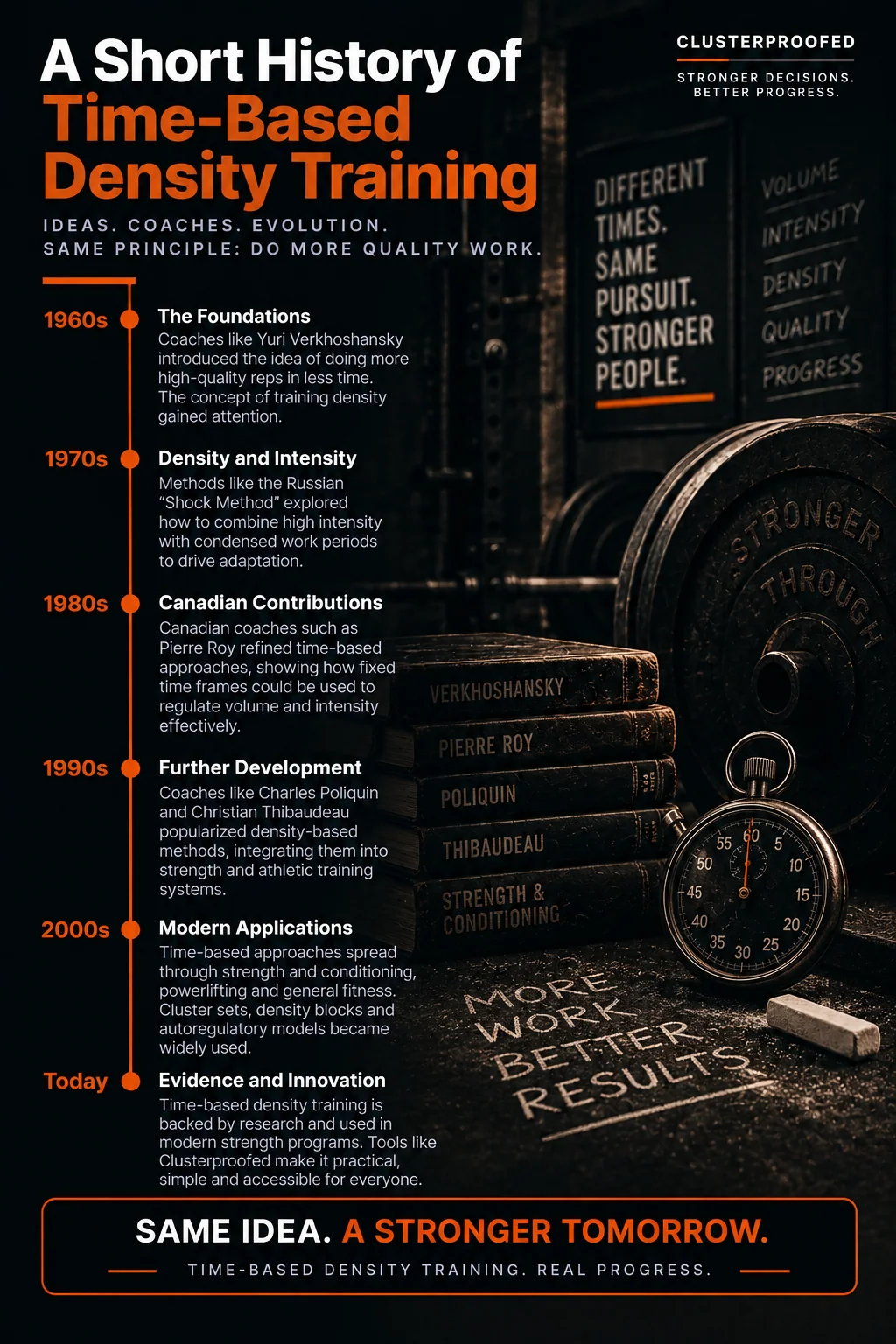
A Short History of Time-Based Density Training
From Soviet-era training methods to Pierre Roy and modern cluster programs — the evolution of time-based density training.
Read more →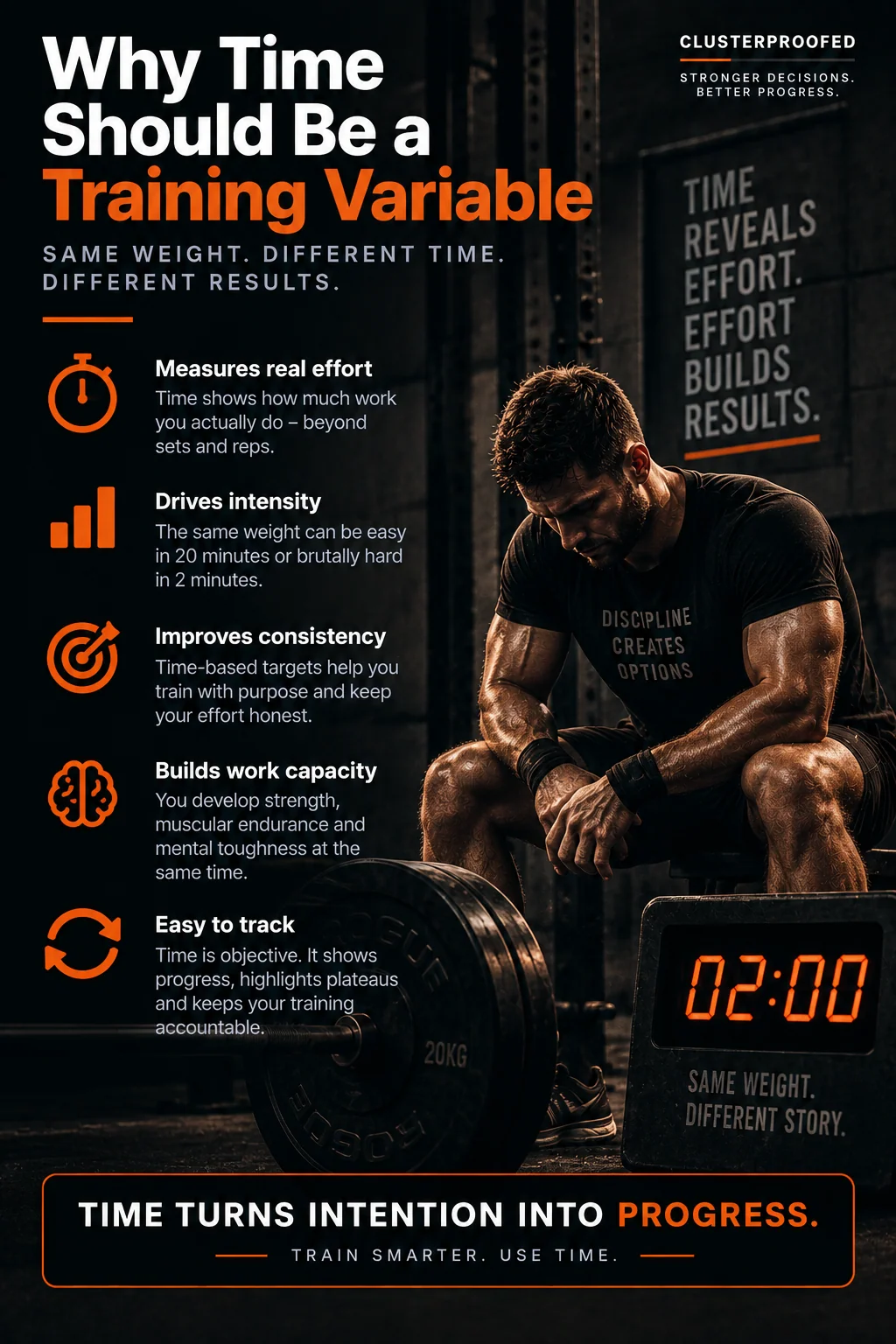
Why Time Should Be a Variable in Strength Training
Weight, sets and reps are standard training variables — time rarely is. Why that's a missed opportunity in strength training.
Read more →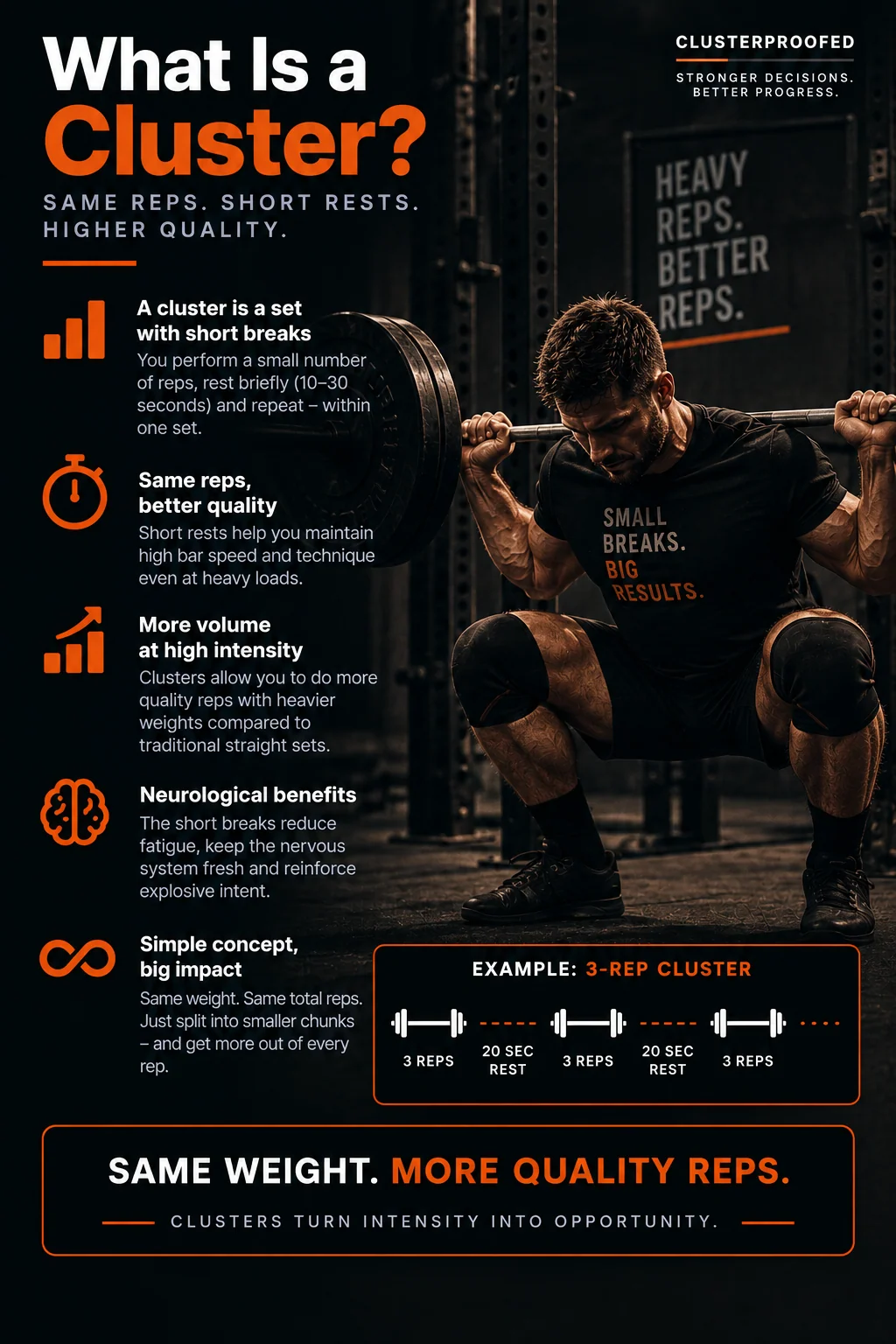
What Is a Cluster?
A cluster is more than a short break between reps. How splitting up a set controls fatigue and protects rep quality.
Read more →Intensity & Fatigue
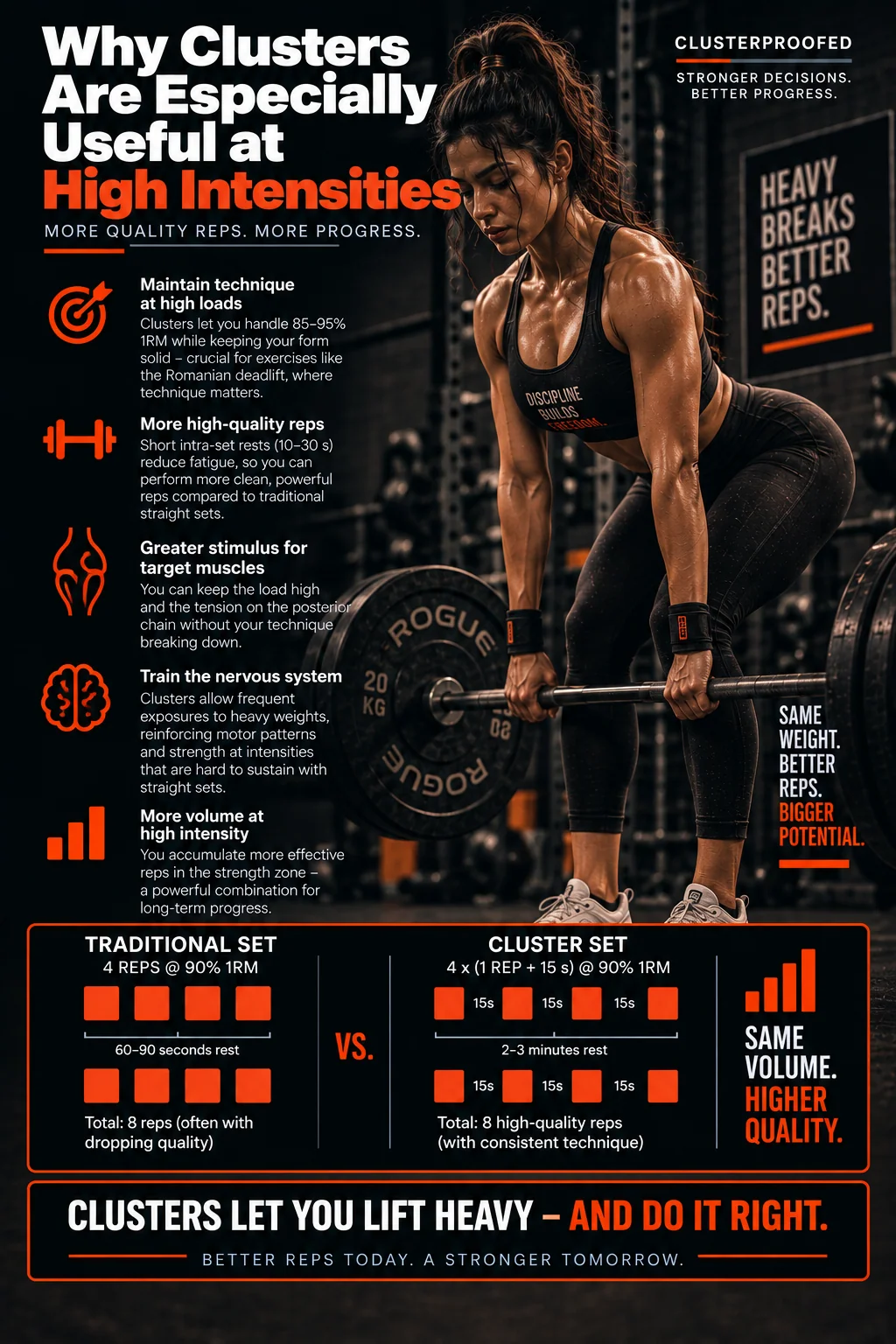
Why Clusters Become Particularly Interesting at High Intensities
At 85–90% of 1RM, technique breaks down fast. Why clusters let you accumulate more high-quality reps at heavy loads.
Read more →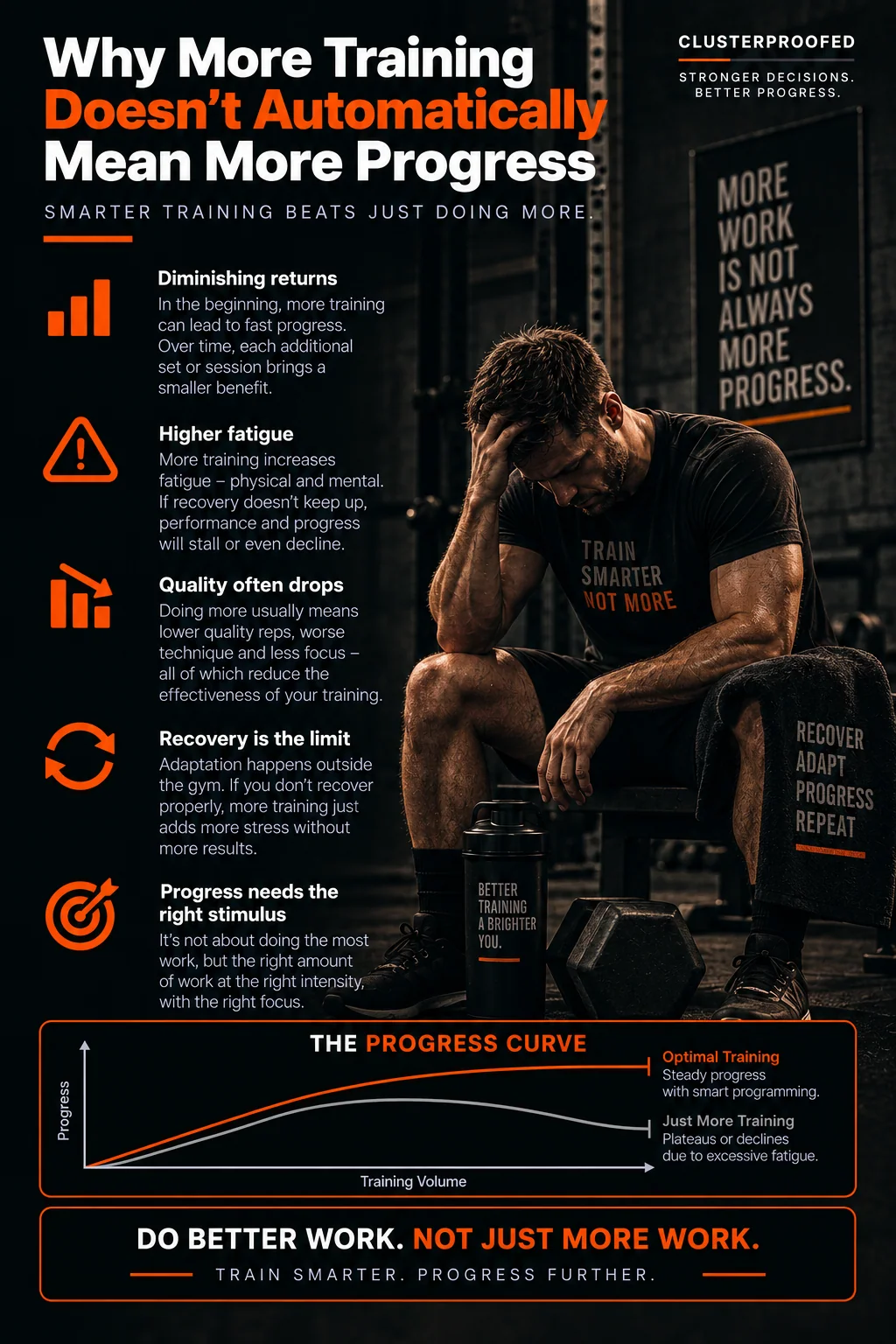
Why More Training Doesn't Automatically Mean More Progress
More sets, more weight, more fatigue — it sounds logical, but isn't automatically better. On the balance between stimulus and fatigue.
Read more →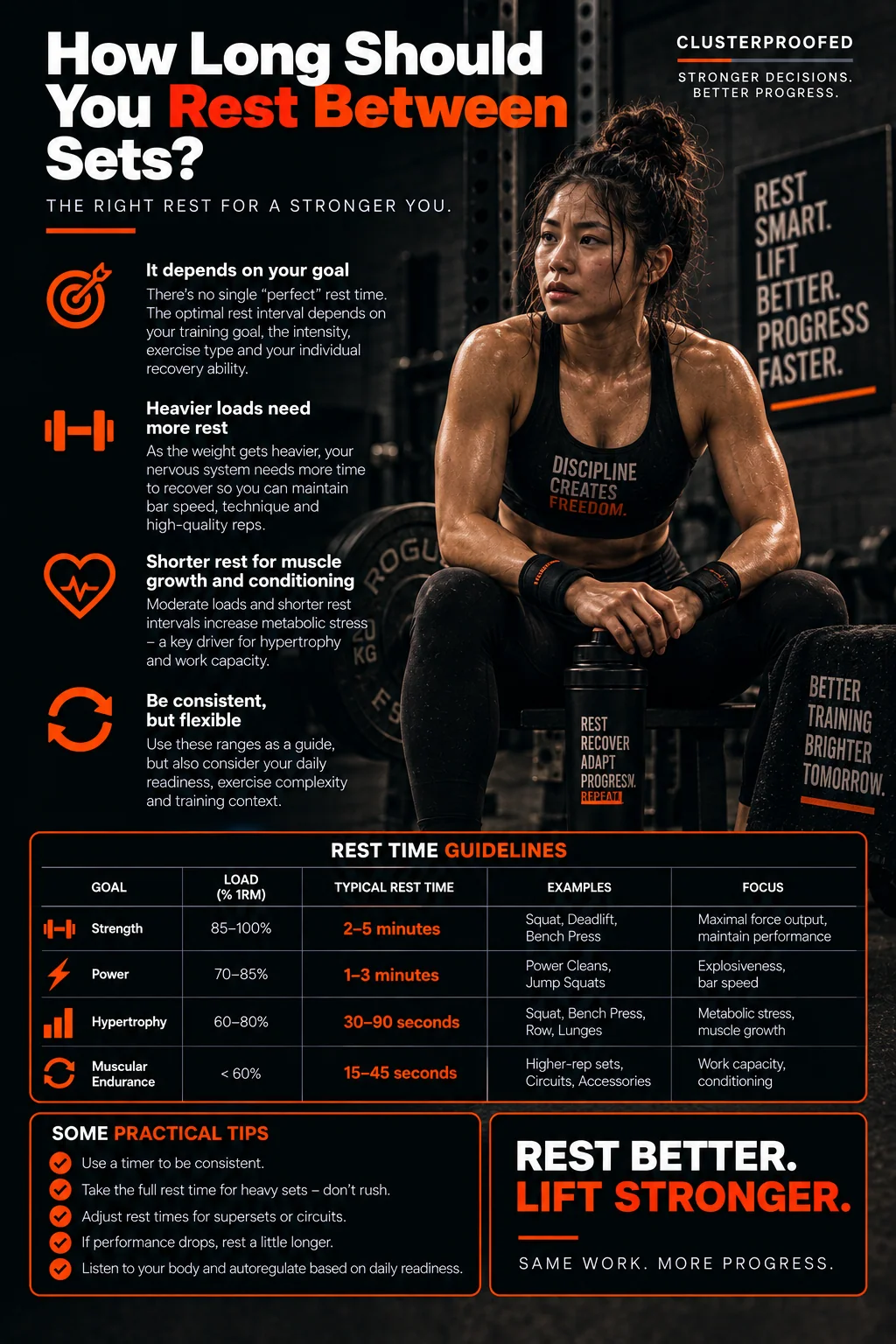
How Long Should You Rest Between Sets?
30 seconds or three minutes? The right rest period depends on your goal, intensity and exercise — there's no universal answer.
Read more →Program Design
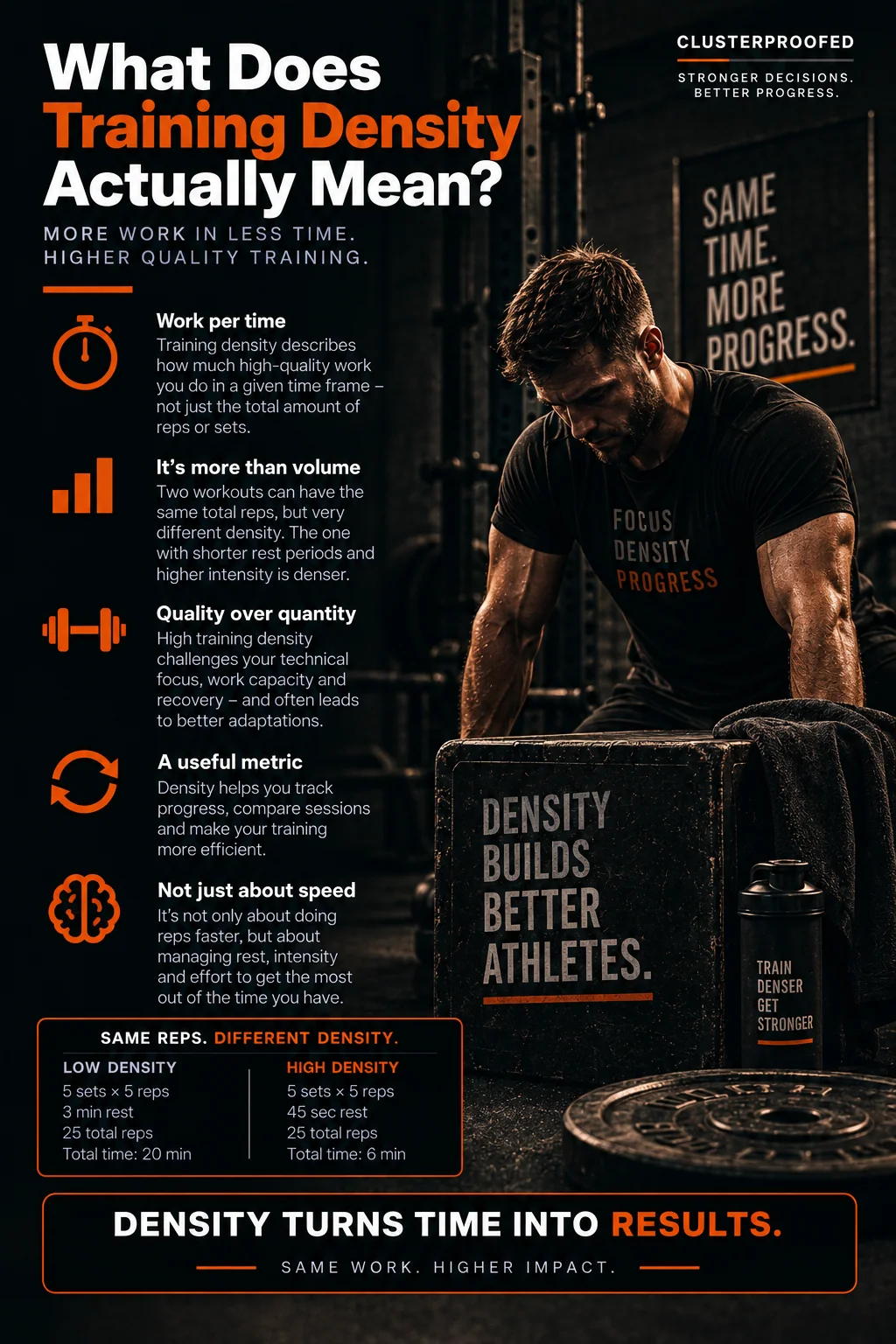
What Does Training Density Actually Mean?
20 reps in 8 minutes is a different stimulus than the same 20 reps in 20 minutes. Why training density is an underrated lever.
Read more →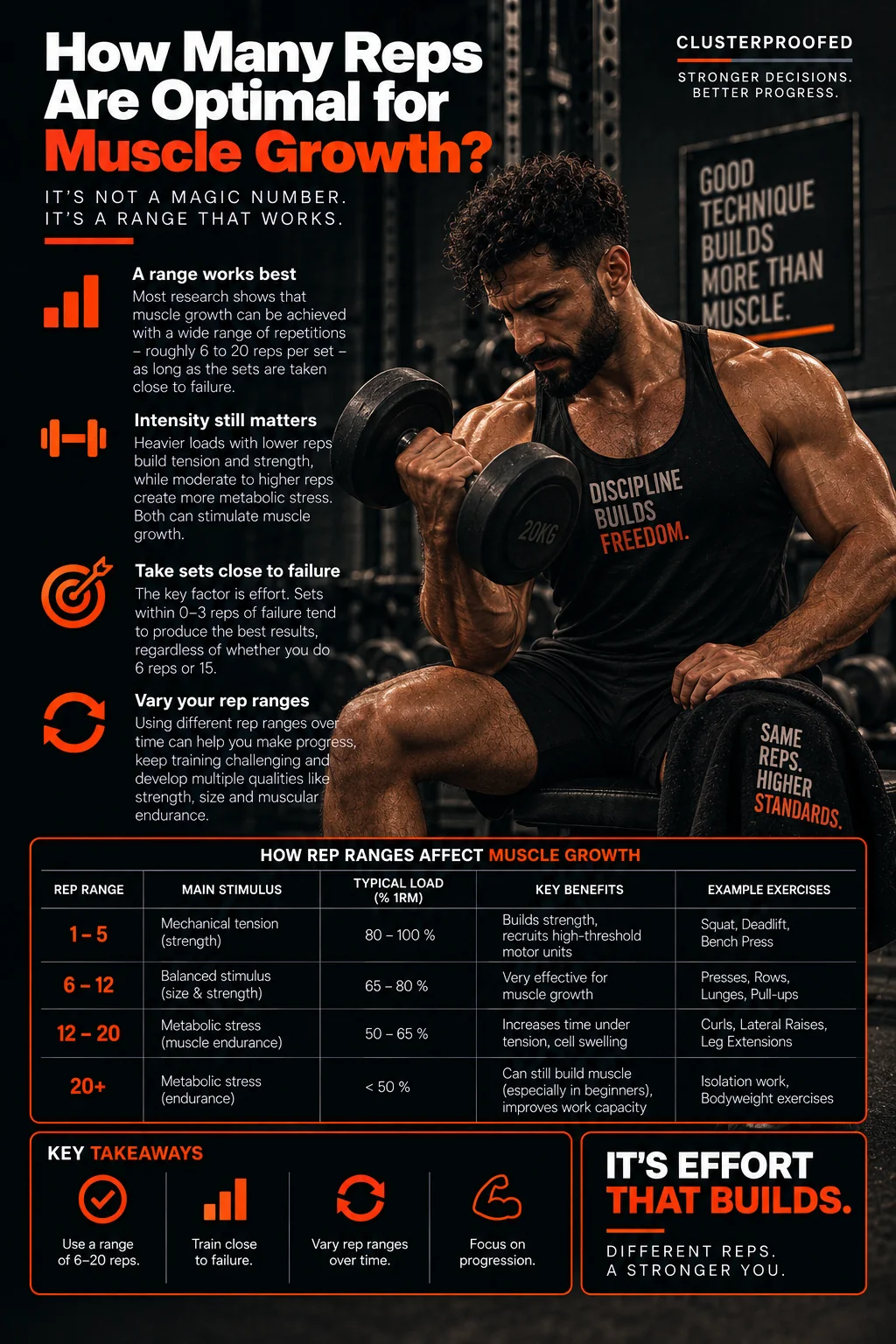
How Many Reps Are Optimal for Muscle Growth?
8–12 reps is the textbook hypertrophy range. What the research actually says about rep ranges and muscle growth.
Read more →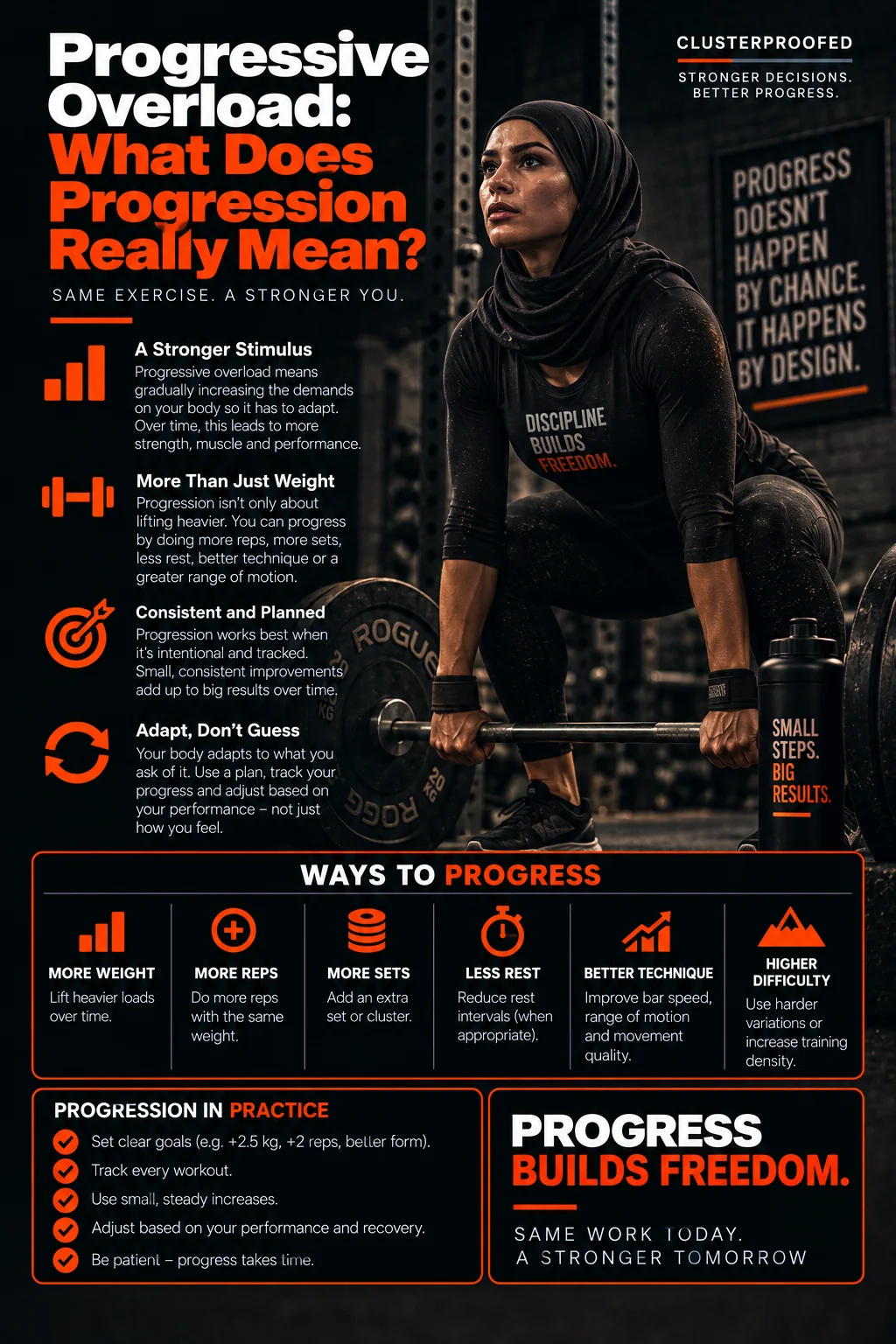
Progressive Overload: What Does Progression in Strength Training Actually Mean?
Adding weight is only one lever for progression. The other ways to drive real progress in your training.
Read more →Advanced Concepts
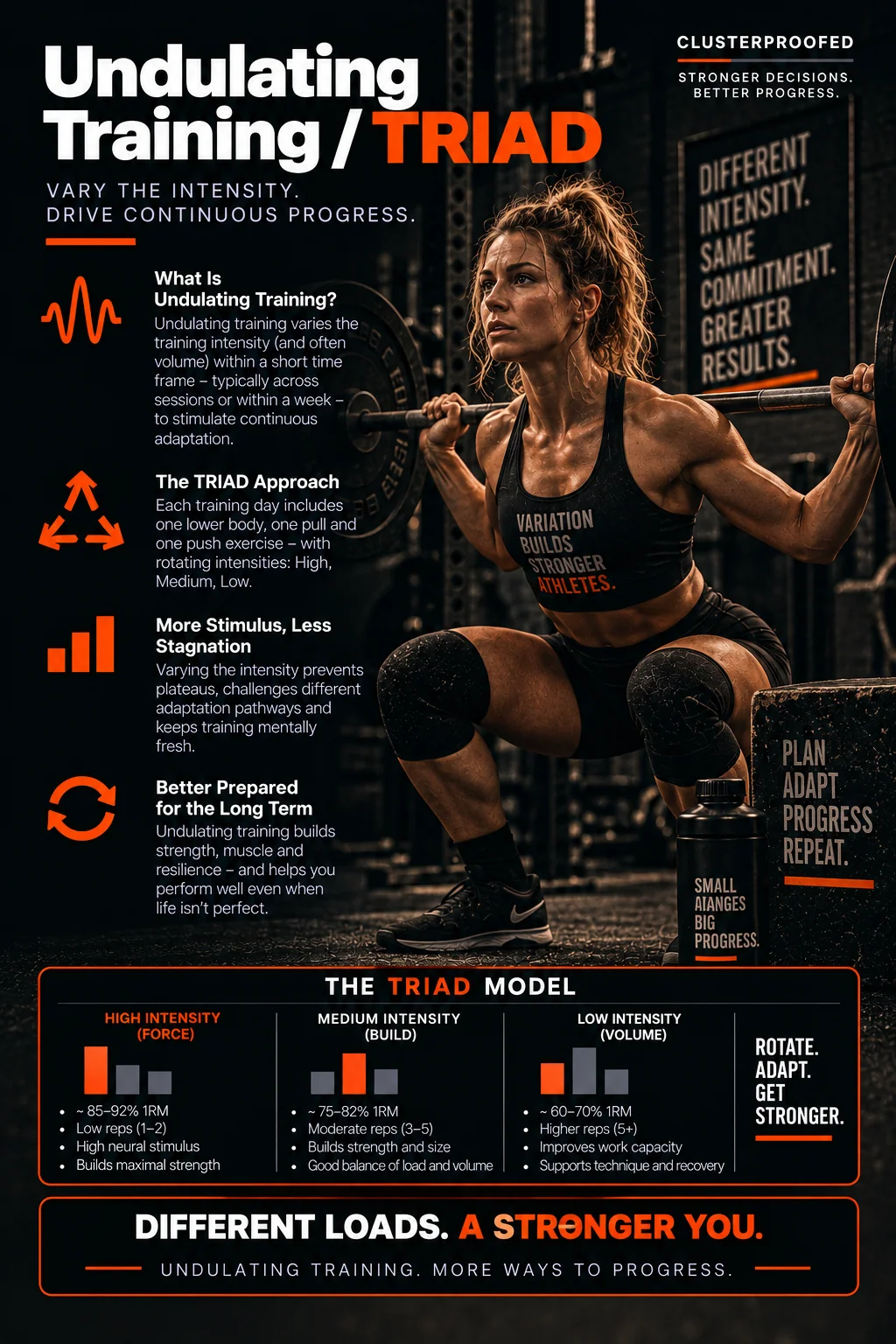
Undulating Training: Why Training Doesn't Have to Look the Same Every Day
Heavy, medium and light days within one week instead of a rigid linear build — what undulating training actually does for you.
Read more →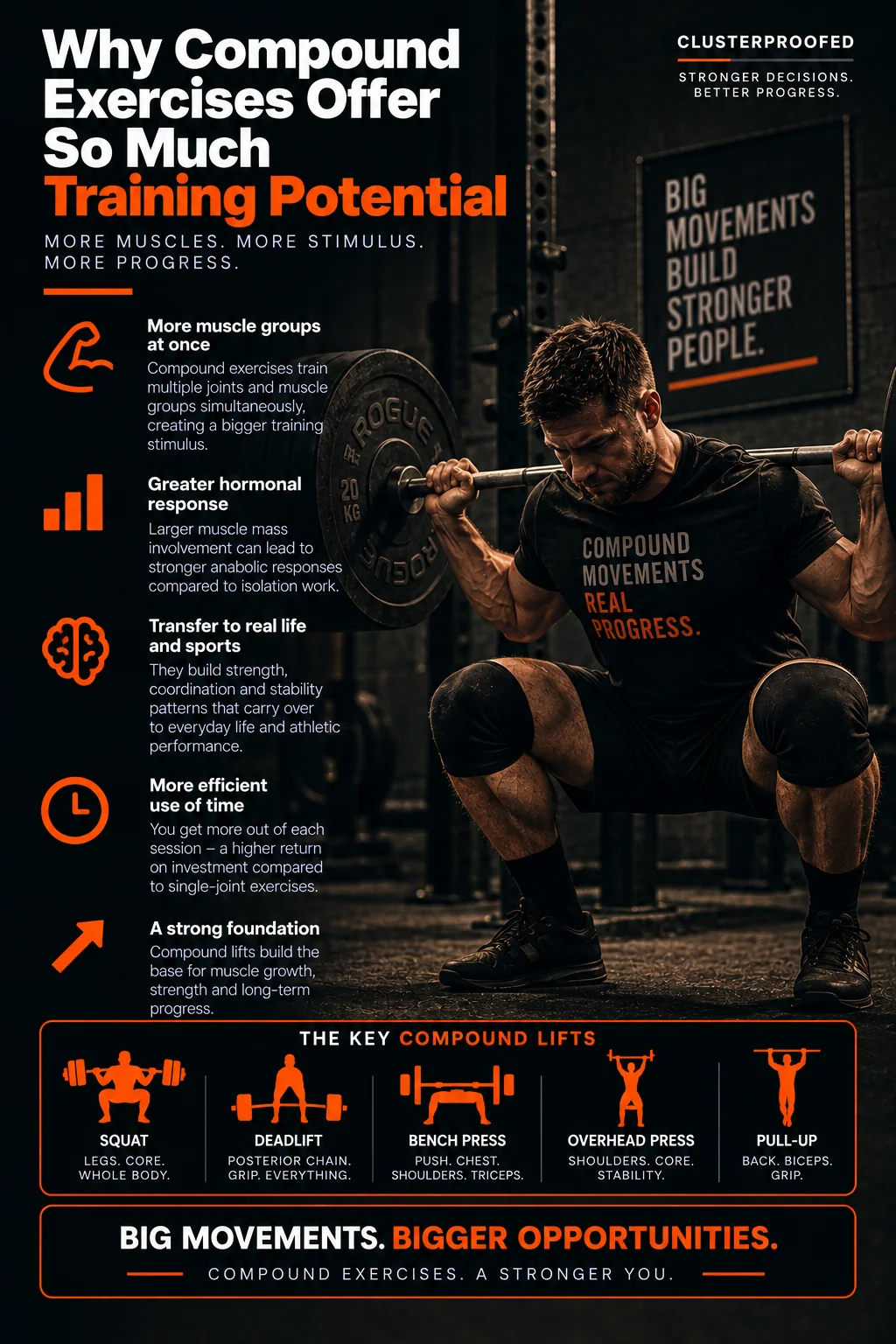
Why Compound Exercises Deliver So Much Training Potential at Once
Squat, deadlift, bench press and friends are called 'better' — but why? What actually sets compound lifts apart from isolation work.
Read more →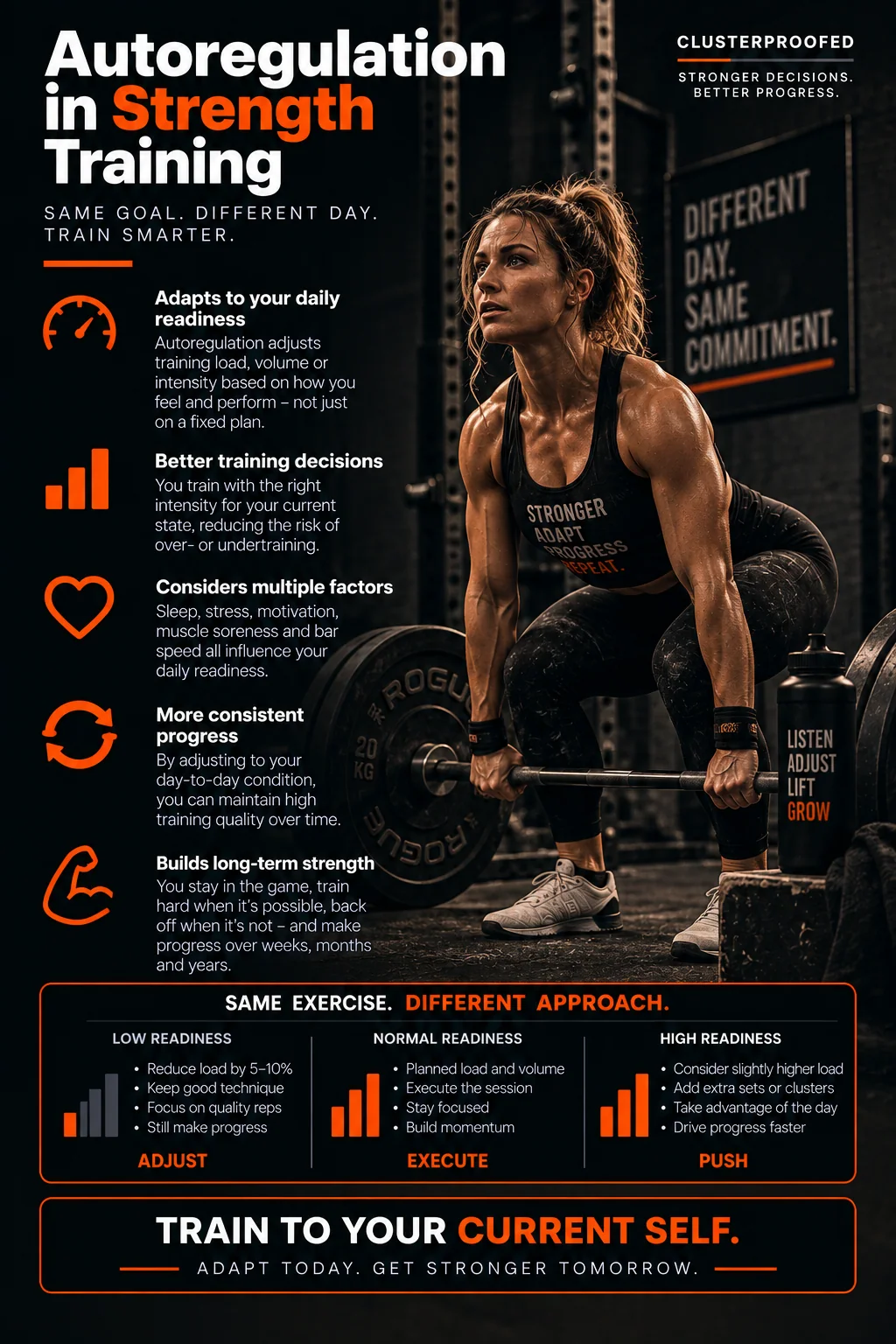
Autoregulation in Strength Training: Why Your Training Plan Can't Know Everything in Advance
A plan doesn't know how you slept or how stressed you are. How autoregulation adapts training to how you actually feel that day.
Read more →